
7 Reasons to Use a Kinetic Energy Rope on the Trail

Last Updated: November 3, 2026
Quick Summary
A kinetic energy rope is a stretchy recovery line that absorbs the shock of a pull and gives it back to the stuck vehicle, turning a violent jolt into a controlled tug. It spreads the load over time instead of hammering your frame like a static strap, so a lighter rig can free a heavier one without a winch.
- Nylon fibers, usually double-braided, give the rope its elasticity and let it store energy as it stretches.
- Attach each end to a rated recovery point with a soft shackle, never a tow ball.
- For a 6,000 lb loaded rig and a 3:1 margin, look for roughly 18,000 lb breaking strength.
- Skip the kinetic rope for steady tows on pavement or pulls at awkward angles.
- Retire the rope if you find glazing, flat spots, or a permanent length increase.
Table of Contents
- Why Off-Roaders Use Kinetic Energy Ropes
- How a Kinetic Energy Rope Works
- Kinetic Rope vs Tow Strap: The Difference That Saves Your Frame
- How to Use a Kinetic Recovery Rope Without Breaking Something
- Sizing a Kinetic Rope to Your Vehicle Weight
- When NOT to Use a Kinetic Rope
- Inspection, Storage, and Fiber Fatigue
- Gear Up for Your Next Recovery
- Frequently Asked Questions
Why Off-Roaders Use Kinetic Energy Ropes
A kinetic energy rope is a stretchy recovery line built to absorb the shock of a pull and give it back to the stuck vehicle, rather than yanking the frame like a chain. That's the short answer to why use a kinetic energy rope: it turns a violent jolt into a controlled tug.
Most stuck situations don't need brute force. They need momentum, delivered gently. A kinetic rope is the tool that does exactly that.
How a Kinetic Energy Rope Works
The rope stores energy as it stretches, then releases it to help move the stuck vehicle. Nylon fibers, usually double-braided, give the line its elasticity. When the pulling rig accelerates, the rope stretches along its length and soaks up the shock load that would otherwise hammer both vehicles.
Here's the key idea: a kinetic energy rope doesn't just pull. It slingshots. The stored energy snaps back into the stuck truck at the moment of maximum stretch, adding a push that a stiff strap simply can't deliver. That's the whole magic trick, and it's why a lighter rig can free a heavier one without a winch.
Kinetic Rope vs Tow Strap: The Difference That Saves Your Frame
The difference between a kinetic rope vs tow strap comes down to stretch. A kinetic recovery rope stretches to absorb shock; a static tow strap barely stretches at all. That single distinction changes how the pull feels and what it does to your vehicle.
A static strap transmits the full shock load straight into your frame, mounts, and bumper. A kinetic rope spreads that load out over time, softening the jolt and reducing the peak force. If you've ever felt a tow strap snap tight, you know the sound. That's your frame taking a hit.
Side-by-Side: Kinetic Rope vs Tow Strap
Feature |
Kinetic Energy Rope |
Static Tow Strap |
|---|---|---|
Stretch |
High, absorbs shock |
Minimal to none |
Best for |
Stuck vehicles, momentum pulls |
Towing, steady pulls |
Shock load handling |
Spreads the jolt |
Transmits it directly |
Recoil risk |
Managed with care |
Low stretch, low recoil |
Typical material |
Double-braided nylon |
Polyester or webbing |
How to Use a Kinetic Recovery Rope Without Breaking Something
The short version of how to use a kinetic recovery rope: attach to solid recovery points on both rigs, keep bystanders clear, and let the pulling vehicle build momentum instead of flooring it from a dead stop. Do it right and the rope does the work. Do it wrong and you're shopping for a new bumper.
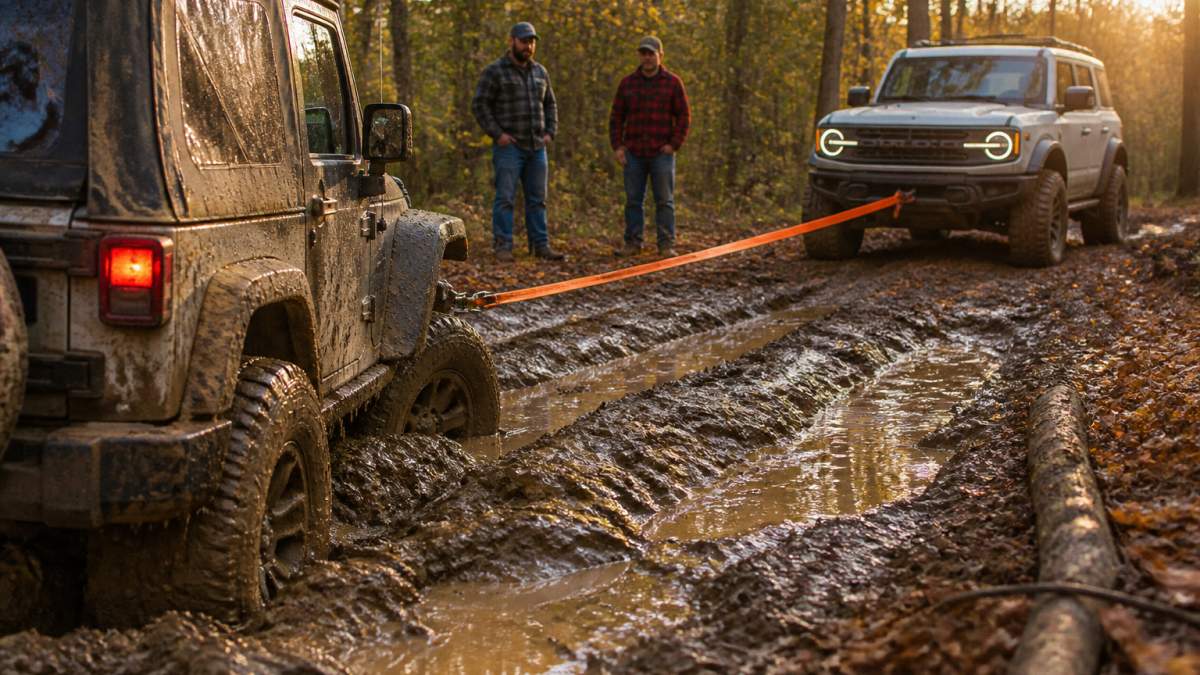
Step-by-Step Recovery
- Confirm both vehicles are in park or neutral with brakes set and wheels straight.
- Inspect the rope for cuts, fraying, or glazing before you connect anything.
- Attach each end to a rated recovery point using a soft shackle, never a tow ball.
- Drape a dampening blanket or heavy jacket over the middle of the line.
- Clear everyone well away from the rope's path.
- Have the pulling driver roll forward and build steady momentum, not a jackrabbit launch.
- Ease off as the rope stretches, then let the stored energy do the pulling.
- Stop and re-check the rope and mounts after the pull.
Watch out: hooking to a tow ball or a factory tie-down loop can turn either one into a projectile. Use rated recovery points only.
Sizing a Kinetic Rope to Your Vehicle Weight
Match the rope's breaking strength to your loaded vehicle weight, then pick diameter and length to suit the pull. That margin covers the dynamic load a kinetic rope generates when it stretches and recoils.
Start with curb weight, then add fuel, passengers, gear, and any trailer. A rig that tips the scales at 5,500 lb empty can easily run 6,500 lb loaded, and that difference matters when you're choosing a rope.
Vehicle Class to Rope Diameter
These are common starting points, not gospel. Confirm against the manufacturer's published breaking strength for the specific rope you're buying.
Vehicle Class |
Typical Loaded Weight |
Common Rope Diameter |
Typical Length |
|---|---|---|---|
UTV / side-by-side |
1,500-2,500 lb |
1/2 inch |
20 ft |
Mid-size SUV / crossover |
4,000-5,500 lb |
3/4 inch |
20-30 ft |
Half-ton pickup / Jeep Wrangler |
5,000-6,500 lb |
7/8 inch |
30 ft |
Three-quarter-ton / one-ton pickup |
7,000-10,000 lb |
1 inch |
30 ft |
Full-size van / heavy trail rig |
9,000-12,000 lb |
1-1 1/4 inch |
30 ft |
Breaking Strength Math
Breaking strength is the load at which the rope fails. Working load limit is the safe working capacity, usually a fraction of breaking strength. If your loaded rig is 6,000 lb and you want a 3:1 margin, look for a rope with a breaking strength around 18,000 lb.
Weigh your truck at a scale loaded, not empty. Guessing is how people end up with a rope that's either a noodle or a crowbar.
Watch out: a rope rated for a 5,000 lb rig will not safely recover a 9,000 lb truck no matter how good the driver is. The math doesn't care about confidence.
When NOT to Use a Kinetic Rope
A kinetic energy rope isn't the right tool for every recovery. As off-roaders on the Bronco Nation forum point out, the rope's stretch stores potential energy that becomes kinetic energy, and that stored energy can make it a poor fit in some situations. Because a rope’s stored energy can make recovery unpredictable, sound judgment about the terrain and off-road navigation tools can help you choose a safer route before you need a pull.
Skip the kinetic rope when:
- You're doing a steady tow on pavement or flat ground
- The stuck vehicle is against a hard obstacle where a shock pull could damage it
- Either vehicle lacks a rated recovery point
- You're pulling at an awkward angle that loads the rope unevenly
Rebound and overheating are real considerations alongside the rope's shock-absorbing benefit. Respect those limits and the rope stays a tool, not a hazard.
Inspection, Storage, and Fiber Fatigue
Inspecting a rope after a hard pull matters, and the steps below give a practical way to do it.
Post-Recovery Inspection Protocol
Do this after every hard pull, before the rope goes back in the bag.
- Run the full length through gloved hands under light tension. You're feeling for flat spots, lumps, and soft sections where the core may have failed.
- Look for glazing, shiny, melted-looking spots where fibers overheated under shock load. Glazing means the nylon has lost elasticity in that section.
- Check for embedded grit, sand, and small stones. Grit works into the braid and saws at fibers from the inside.
- Inspect both eyes and any splices for frayed strands, loose stitching, or pulled threads.
- Bend the rope sharply at several points. A healthy nylon rope should feel supple; a stiff or crunchy section is a red flag.
- Compare the rope's overall length to its original spec. A rope that has permanently stretched more than a few percent has lost recovery capacity.
If you find glazing, flat spots, a permanent length increase, or more than a few broken strands in the braid, retire the rope. A kinetic rope is a consumable, and a worn one loses the stretch you're paying for.
How UV, Mud, and Salt Water Degrade Nylon
Nylon is hygroscopic, it absorbs moisture, and that's the root of most long-term damage. UV exposure breaks down the polymer chains on the surface, which is why a rope that lived on a bumper rack all summer feels chalky and stiff. Mud and grit are abrasive; every stretch cycle grinds those particles deeper into the braid. Salt water is worse: the salt crystals draw moisture into the core and accelerate hydrolysis, the chemical breakdown of nylon in the presence of water.
A common pattern is a rope that performs fine for two seasons of fair-weather use, then fails suddenly after a winter of salty road spray and mud. The damage is internal and invisible from the outside.
Storage That Actually Protects the Rope
Wash with mild soap and lukewarm water, rinse thoroughly, and hang to dry out of direct sun. Never store nylon wet, trapped moisture is the enemy. Coil loosely and keep it in a breathable bag, not a sealed plastic tote that traps condensation. Store it out of sunlight and away from gasoline, oil, and solvents, which attack nylon.
Watch out: a rope that looks fine on the outside can have a core full of salt crystals and broken filaments. If it's been through a salty winter or sat in the sun for years, retire it rather than trusting it on a hard pull.
Gear Up for Your Next Recovery
Recovery gear is only as good as the setup around it. A kinetic energy rope paired with rated points, soft shackles, and a dampening blanket turns a sketchy stuck into a routine pull. Get the sizing right, inspect it often, and know when to reach for a winch instead.
Our team at Unlimited Offroad has over 20 years of industry expertise, and we're happy to help you think through the right rope and recovery points for your rig. We offer free consultations and can quote your installation so you hit the trail prepared.
Frequently Asked Questions
Are kinetic recovery ropes worth it?
For anyone who wheels with a group, yes. A kinetic energy rope lets the tow vehicle build momentum and converts it into a stretch-and-pull instead of a hard jolt, which is easier on both rigs. It weighs less than a winch setup and packs down small. The catch is sizing it to your vehicle weight and inspecting it after every hard pull, because fiber fatigue and abrasion are what retire a rope. Store it dry between trips.
When should you avoid using a kinetic energy rope?
Skip it when there is no safe run-up for the tow vehicle, when either rig has a questionable recovery point, or when the stuck vehicle is on a sidehill where a sudden release could roll it. Rebound and overheating are real drawbacks, and stored stretch is stored energy. If a slow, controlled pull makes more sense, a winch or static strap is the better call. A kinetic energy rope is a momentum tool, not a cure-all.
Is a kinetic rope better than a tow strap?
They do different jobs. A kinetic rope stretches to absorb shock load, so it shines for dynamic recoveries in mud or sand. A static tow strap has little give, which makes it right for flat towing and steady pulls on firm ground. Using a tow strap as a snatch rope sends the jolt straight into your frame and recovery points. Match the tool to the recovery, and keep both in the rig.
How does the stretch of a kinetic rope protect my vehicle?
The nylon fibers elongate under load, storing kinetic energy and releasing it gradually instead of in one spike. That jolt reduction spares your frame, bumper mounts, and shackles from the shock load a static strap would deliver. It also lets the tow vehicle use vehicle momentum rather than raw power. The trade-off is recoil: if a recovery point fails, that stored energy has to go somewhere, so rated hardware and a dampener on the line matter.
Ready to stop guessing and start pulling clean? Book a professional rig inspection with Unlimited Offroad and get your recovery setup dialed in by people who actually wheel.
