
How to Clean Recovery Ropes After Mud Without Ruining Them

Last Updated: November 14, 2026
Quick Summary
To clean recovery ropes after mud, rinse off loose mud, soak the rope in clean water for 10 to 30 minutes, work in mild soap section by section, then rinse until the runoff runs clear. Hang it in the shade to air-dry completely and inspect the full length before storage.
- Never use a pressure washer, since high pressure forces grit deeper into the weave.
- Skip harsh chemicals and stiff wire brushes, which can permanently fray the outer weave.
- Never twist or wring a kinetic rope; gently agitate and let the water do the work.
- Plan on a full day or more of shade drying, because a rope dry outside can hold moisture in the core.
- Retire any rope with deep cuts, melted fibers, damaged eye stitching, or a kink that will not straighten.
Table of Contents
- Why Mud Is Quietly Killing Your Recovery Ropes
- What You Need Before You Clean Recovery Ropes
- How to Clean Recovery Ropes After Mud: Step by Step
- How to Clean Kinetic Recovery Rope Without Damaging the Fibers
- How to Dry a Recovery Rope So It Lasts
- Recovery Rope Inspection and Maintenance After Every Mud Bath
- Recovery Rope Storage After Use: Keep It Clean Between Trips
- Book a Free Gear Inspection Before Your Next Trail Run
- Frequently Asked Questions
Why Mud Is Quietly Killing Your Recovery Ropes
Mud feels harmless until it dries inside your rope. That gritty dirt works its way between the fibers and grinds them every time the rope stretches.
Here is the part most folks miss: a muddy rope fails from the inside out. At Unlimited Offroad, we have spent over 20 years working on Jeeps, Broncos, and 4x4s, and we know how much neglected gear can cost on the trail.
Recovery rope care is simple once you know the steps. Below, we break down exactly how to clean recovery ropes after mud so yours stay strong for years.
Recovery rope cleaning is the process of removing mud, grit, and debris from the fibers of a kinetic or winch rope, then drying and inspecting it before storage.
What You Need Before You Clean Recovery Ropes
Gather your supplies first. A little prep saves a lot of hassle once your hands are wet and muddy.
- A large bucket or tub big enough to coil the rope inside
- Clean water from a hose or tap
- Mild soap or liquid laundry detergent, never harsh chemicals
- A soft brush for stubborn spots
- A clean towel for blotting
- A shady spot to hang the rope and air-dry
Skip the pressure washer. High pressure can force grit deeper into the weave instead of flushing it out.
Watch out: using a stiff wire brush or harsh cleaner can fray the outer weave. That damage is permanent.
How to Clean Recovery Ropes After Mud: Step by Step
Here is a proven method. Follow these steps in order, and you can get the grit out without wrecking the fibers.
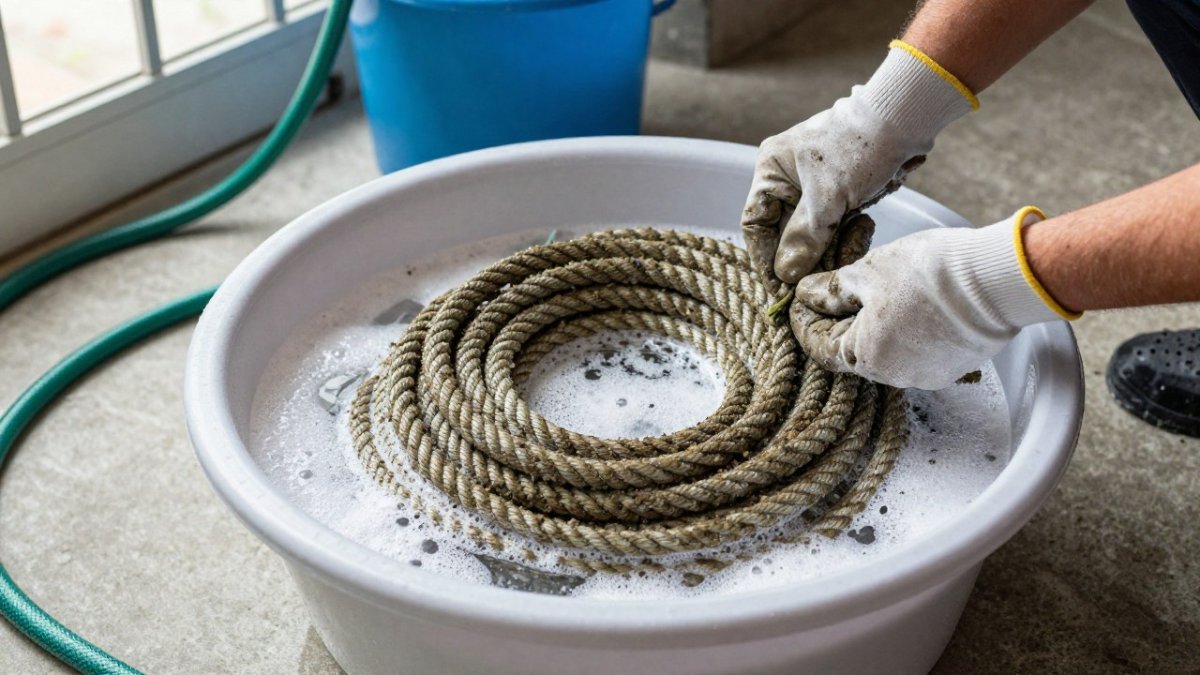
Step 1: Rinse the Loose Mud Off First
Lay the rope out flat and hose off the big chunks. Work from one end to the other. This knocks off the surface mud before it turns into a gritty paste. For a winch rope, spool it out completely first, never rinse a winch line while it is still wound tight on the drum, because you will just push mud into the layers you cannot see. For a kinetic rope, uncoil it fully so water can reach the whole length. For a strap, lay it flat and rinse both faces.
Step 2: Soak to Loosen the Embedded Grit
Coil the rope into your tub and cover it with clean water. Let it soak for 15 to 30 minutes. This softens the grit hiding between the fibers. Kinetic ropes and straps can take the full soak. A winch rope with a tight synthetic cover benefits from a shorter soak, 10 to 15 minutes, because the cover holds water longer and you do not want to drive moisture into the core. If the mud has dried hard, a second soak is fine; just do not leave any rope submerged overnight.
Step 3: Work the Weave With Mild Soap
Add a small amount of mild soap to the water. Gently work the rope with your hands, squeezing the weave so soapy water pushes through. For stubborn spots, use a soft brush with light strokes.
Watch out: scrubbing hard on the outer weave of a kinetic rope scuffs the cover that protects the load-bearing core. Light strokes only, and stop when the runoff looks gritty rather than soapy.
Step 4: Rinse Until the Runoff Runs Clear
Rinse with clean water until the runoff runs clear. No suds, no grit. For a winch rope, rinse along the full length while it is still off the drum, then let it drain before spooling. For a strap, rinse both faces and the edges, where grit likes to hide. If you see grit still coming out after two rinses, go back to Step 3 rather than rinsing harder.
Step 5: Decide Whether You Are Done
This is the step most guides skip. You are done when the runoff is clear, the weave feels free of grit when you squeeze it, and no sand falls out when you flex the rope. If grit keeps appearing, stop and reassess, repeated scrubbing does more damage than a little leftover dust. For heavily embedded sand, a second soap-and-soak cycle is safer than aggressive brushing.
| Step | What You Do | Time |
|---|---|---|
| Rinse | Hose off loose mud | 5 minutes |
| Soak | Submerge in clean water | 10-30 minutes (shorter for winch ropes) |
| Wash | Work in mild soap, section by section | 5-10 minutes |
| Rinse | Flush until water runs clear | 5 minutes |
| Check | Squeeze and flex to confirm no grit | 2 minutes |
Time for each recovery rope cleaning step
How to Clean Kinetic Recovery Rope Without Damaging the Fibers
Kinetic ropes stretch, and that stretch is where the magic happens. Rough handling during cleaning can hurt that stretch. So treat the rope like a stretched rubber band, not a dirty shop rag.
Never twist, wring, or crank on a kinetic rope. Wringing forces grit deeper and can stress the fibers. Gently agitate instead, and let the water do the work.
A common mistake is scrubbing too hard on the outer weave. The cover protects the load-bearing core. Scuff it up, and the core is exposed to sand and sun.
How to Dry a Recovery Rope So It Lasts
Hang the rope in the shade and let it air-dry completely. Sunlight breaks down synthetic fibers over time, so keep it out of direct sun.
Spread the rope so air reaches every part. A loose coil on a clean rack works well. Flip it once or twice so both sides dry.
How long does it take? It depends on humidity, but plan on a full day or more. A rope that feels dry on the outside can still hold moisture deep in the core. Store it wet, and you invite mildew and fiber damage.
Recovery Rope Inspection and Maintenance After Every Mud Bath
Give your rope a once-over every time you clean it. Run your hands along the full length and look for problem spots. Inspection is what tells you whether a rope is still safe to use, so here is what to look for and when to pull gear from service.
Remove any abrasion guards or chafe sleeves before cleaning so grit does not hide underneath. Check them for wear too.
What to Check on Kinetic Ropes
- Frays or fuzz on the outer weave, light fuzz is normal; a frayed patch you can pick at is not
- Flat or stiff spots that will not flex, a kinetic rope should feel uniformly supple along its length
- Cuts, burns, or melted sections, any melted fiber is a retire signal
- Discoloration that suggests chemical damage, a bleached or glazed look means the fiber has been compromised
- Loose or damaged stitching at the eyes, stitching failure is a common weak point
What to Check on Winch Ropes
- Cover damage that exposes the core, the cover is the first line of defense against grit and UV
- Glazing or flattening from heat or drum pressure
- Kinks that will not straighten, a kinked winch rope has a weak spot you cannot see
- Contamination that will not rinse out, embedded grit in the cover is a slow killer
What to Check on Recovery Straps
- Edge wear, straps fail at the edges first
- Stitching at the loops, look for loose or broken thread
- Stiff or crusty sections where mud has dried in
- Cuts or nicks that go deeper than the surface weave
When to Retire the Rope
If you find deep cuts, melted fibers, a section that stays stiff, damaged stitching at the eyes, or a kink that will not straighten, retire the rope. A failed recovery rope is dangerous to you and everyone on the trail. A compromised load-bearing fiber generally cannot be safely repaired, and cleaning will not restore it. When in doubt, err on the side of replacement, the cost of a new rope is nothing compared to a recovery that lets go under load.
Cleaning Frequency and Other Contaminants
Mud is the headline, but it is not the only thing that ends a rope's life. A quick rinse after a dusty trail day is enough for routine care. A full soap-and-soak is for mud that has dried in or grit you can feel in the weave. Salt, oil, fuel, and other chemicals need more attention: rinse thoroughly with clean water, use mild soap only, and inspect closely for discoloration or stiffness afterward.
Recovery Rope Storage After Use: Keep It Clean Between Trips
Store your rope clean, dry, and loose. A tight coil in a hot trunk is a bad home for synthetic fibers.
- Coil it loosely and hang it or lay it flat
- Keep it out of direct sunlight
- Store it away from oil, gas, and solvents
- Never pack it away wet
Good recovery rope storage means the rope is ready to go the next time you need it. No surprises, no weak spots.
Book a Free Gear Inspection Before Your Next Trail Run
Your recovery gear takes a beating, and mud is only part of it. If you are not sure your rope is still trail-ready, let our team take a look. We would be glad to check yours.
At Unlimited Offroad, we offer free consultations to review your setup. Our team includes experienced off-roaders who can help with your build.
Get started with Unlimited Offroad and hit the trail with gear you can trust.
Frequently Asked Questions
Can I wash a recovery rope with Dawn dish soap?
Dawn and other mild liquid dish soaps work fine for cutting trail grime, as long as you dilute them and rinse thoroughly afterward. The trick is to avoid harsh chemicals, degreasers, or bleach, which can break down synthetic fibers over time. Mix a small squeeze into a bucket of lukewarm water, work it into the weave, then flush with clean water until the suds are gone. Skip the washing machine and stick to hand-washing so you can control the agitation.
How often should you clean recovery ropes after off-roading?
Clean your recovery ropes after every trip where they picked up mud, sand, or grit, and give them a quick freshwater rinse even after a dry, dusty run. Embedded grit acts like sandpaper inside the weave and wears fibers from the inside out. If you only used the rope on clean rock or dry dirt, a rinse and full dry is usually enough. Muddy, sandy, or salty conditions call for the full soak-and-scrub routine.
Can you put a recovery rope in a washing machine?
Don't. A washing machine's agitator and spin cycle put uneven stress on the fibers, and the drum can snag the weave or chafe guards. Hand-washing in a bucket or tub gives you control over agitation and lets you inspect the rope as you go. Use lukewarm water, mild soap, and your hands or a soft brush, then rinse thoroughly. It takes 15 to 30 minutes and saves you from replacing a rope that got beaten up by the spin cycle.
How do you know when a recovery rope is fully dry?
A recovery rope is fully dry when the core feels dry to the touch, not just the outer sheath. Hang it in the shade with good airflow, spread the weave open every few hours, and give it at least 24 hours, longer in humid conditions. Feel along the length for cool or damp spots, especially in the middle where coils trap moisture. Storing a damp rope invites mildew, which weakens fibers and leaves a smell you won't scrub out.
