
7 Snatch Block Rigging Mistakes That Wreck Winch Recoveries

Quick Summary
A snatch block is a pulley with a side opening that lets you slip it onto a winch line without threading the rope through from the end. It redirects the pull and can roughly double the force your winch delivers, which helps free a stuck vehicle. Always check the rated capacity stamped on the block before rigging it.
- Check the rated capacity stamped on the block before every rigging job.
- A double-line pull roughly doubles pulling force but halves line speed and needs about twice the rope.
- Use a tree saver strap on the anchor, never wrap the winch line around a tree.
- Stop the winch immediately if the anchor shifts, a shackle slips, or the line binds.
- Keep everyone out of the line of fire, usually at least one and a half times the rope length.
Table of Contents
- What a Snatch Block Does and How It Works
- When a Snatch Block Earns Its Place in a Recovery
- Single-Line vs. Double-Line: Choosing Your Winch Pulley Configuration
- Winch Recovery Gear Setup: Step-by-Step Rigging Sequence
- Gear Ratings, Compatibility and the Load Math Most People Skip
- Safety Checklist and Failure Scenarios to Plan For
- Get Your Recovery Setup Checked Before the Trail Checks You
- Frequently Asked Questions
What a Snatch Block Does and How It Works
A snatch block is a pulley with a side opening, so you can slip it onto a line without threading the rope through from the end.
The "snatch" part is the side plate that opens. You can drop the block onto a line anywhere along its length, which saves a lot of time when the rope is already rigged.
Watch out: A snatch block is only as strong as its weakest part. Always check the rated capacity stamped on the block before you rig it.
When a Snatch Block Earns Its Place in a Recovery
A snatch block earns its spot when the winch cannot reach the stuck vehicle straight on, or when the pull needs more force than one line can give. Here are the common cases:
- The anchor is off to the side. A tree or rock sits at an angle, so you redirect the line around a block.
- The vehicle is deep in mud. A doubled line gives you more pulling power at a slower rate.
- You need to pull from a different spot. The block moves your anchor point without you moving the truck.
Be honest with yourself about the rating. A block that cannot handle the load will fail, and a failing block sends metal and rope in unpredictable directions. Most trail rigs run far lighter loads than heavy wreckers, but the principle is the same: match the block to the job. If you are not sure what your setup needs, a Free Consultation with our team is a good place to start.
Single-Line vs. Double-Line: Choosing Your Winch Pulley Configuration
A single-line pull runs the winch rope straight from the winch to the anchor. It is simple and fast, and it is the setup most people start with.
A double-line pull runs the rope out to a snatch block, then back to the vehicle, and attaches the end to the anchor.
Use a single line when you need speed and the load is light. Use a double line when the vehicle is buried or the pull is heavy.
Here is how the two pull setups compare at a glance.
| Configuration | Pulling force | Line speed and rope needed |
|---|---|---|
| Single-line | Winch's full rated pull | Full line speed; less rope |
| Double-line | Roughly double the force | Half the line speed; about twice the rope |
Winch Recovery Gear Setup: Step-by-Step Rigging Sequence
Here is the sequence we use. Do it in this order every time, and never skip the inspection.
- Inspect every piece. Check the winch rope for fraying, the snatch block for cracks, and every shackle for wear. Replace anything damaged before you start.
- Pick a solid anchor. Choose a strong tree, a recovery point rated for the load, or a dedicated anchor. Avoid dead trees and thin trunks.
- Protect the anchor. Wrap the tree with a tree saver strap so the bark doesn't get cut and the strap doesn't slip.
- Connect the block. Attach the snatch block to the anchor with a rated shackle, and confirm the pin is fully seated.
- Route the line. Run the winch line through the block and back to the stuck vehicle's recovery point. Keep the line straight and clear of rocks.
- Secure the hook. Attach the winch hook to the vehicle's recovery point with a rated D-ring shackle.
- Clear the area. Move everyone out of the line of fire, usually at least one and a half times the length of the rope.
- Winch slowly. Take up the slack, then pull at a steady speed while watching every connection.
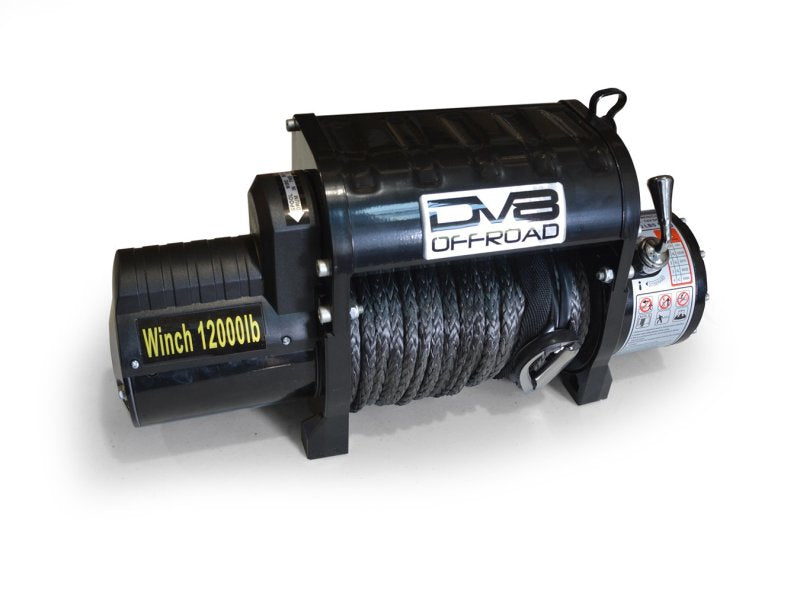
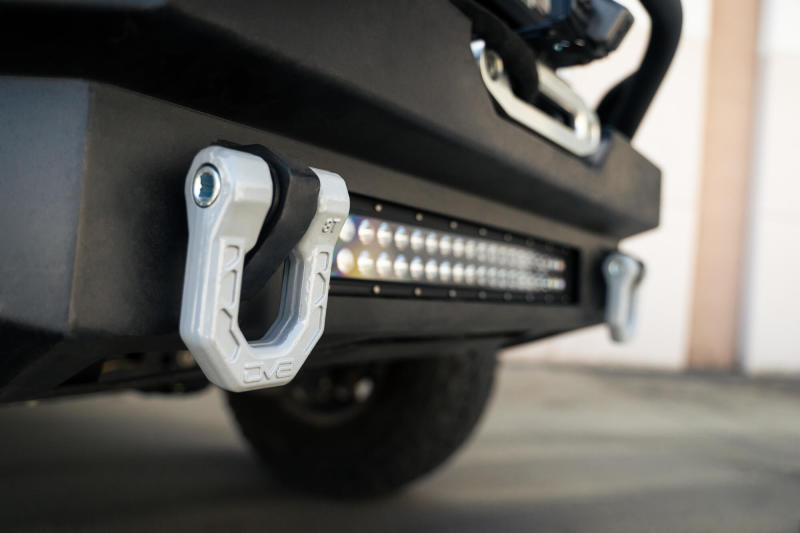
For gear, the DV8 Offroad 12000 LB Winch w/ Synthetic Line & Wireless Remote gives you a complete winch with a wireless remote so you can stand clear during the pull. Pair it with DV8 Offroad Elite Series 3/4" D-Ring Shackles | Pair (Gray) to connect the hook and anchor points.
Picking a Solid Anchor Point and Using a Tree Saver
A good anchor is the most important part of the whole setup.
A tree saver strap protects the trunk and gives the rigging a flat, wide contact surface. Wrap it around the tree, not the hitch or bumper, and connect your shackle through the loop.
Watch out: Never wrap a winch line around a tree. The line can cut into the bark and slip, and it creates a dangerous snap-back hazard.
Gear Ratings, Compatibility and the Load Math Most People Skip
Every piece of recovery gear has a rating, and your system is only as strong as its lowest-rated part.
Here is the part most articles skip: a snatch block does not simply double the safe capacity of every component.
Look at these numbers before you pull:
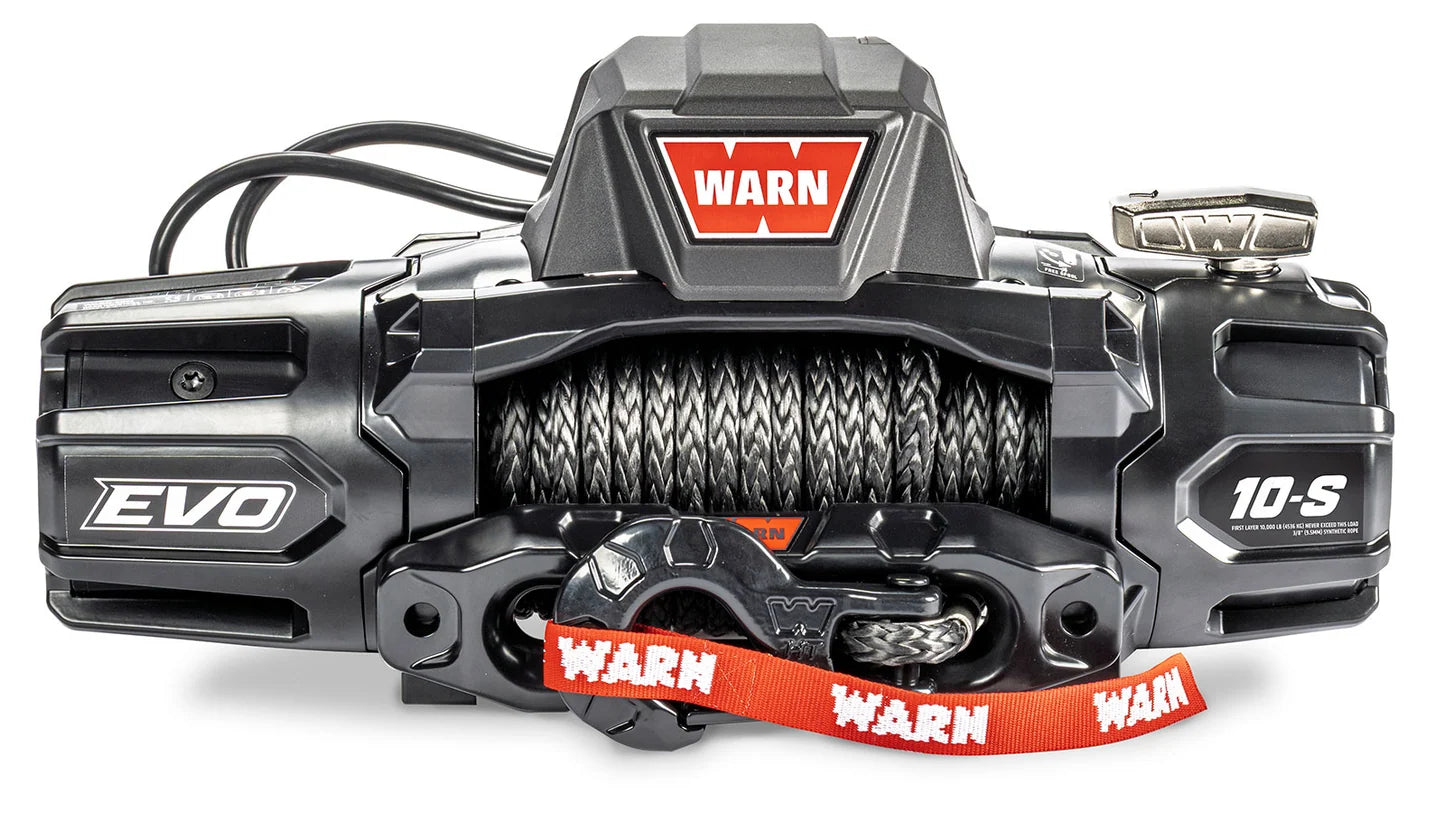
- Winch rating: the single-line pull the winch is rated to deliver. A WARN EVO 10-S Winch is rated at 10,000 pounds; the WARN EVO 12-S 12,000 lb Synthetic Rope Winch | 110220 is rated at 12,000 pounds.
- Shackle working load limit: the maximum load the shackle should carry. The DV8 Offroad Elite Series D-Ring Shackles list an 8-ton working load limit and a 72,000-pound breaking strength.
- Snatch block rating: the capacity stamped on the block. In a double-line pull, the block and anchor must be rated for roughly twice the winch's line pull, not just the winch rating.
- Tree saver rating: the strap's own limit, which must also cover the doubled load at the anchor.
Compatibility is where most setups quietly go wrong. Run this checklist before you rig:
- Rope type and diameter: match the block's sheave groove to your rope. Synthetic rope needs a smooth, wide groove; steel cable needs a groove that fits the cable diameter without pinching.
- Sheave diameter: a larger sheave reduces bend radius and heat, which matters most for synthetic rope. A too-small sheave concentrates stress and shortens rope life.
- Block rating vs. winch capacity: the block must exceed the doubled line pull, not just the winch's single-line rating.
- Shackle size and pin fit: the shackle pin must fit the block's attachment hole and the anchor strap loop without slop.
- Recovery point rating: the vehicle's recovery points must be rated for the load the pull will actually place on them.
- Line length: a double-line pull uses roughly twice the rope, so confirm you have enough line on the drum.
Synthetic rope is lighter and easier to handle than steel cable, but it needs care. Keep it off sharp edges, and never let it run across a hot surface. Replace it when it shows damage.
Watch out: Never assume a snatch block doubles the safe working load of your anchor, shackles, or recovery points.
Safety Checklist and Failure Scenarios to Plan For
Before every recovery, run through this checklist:
- Every piece of gear is inspected and rated for the load
- The anchor point is solid and protected with a tree saver
- The line is routed without crossing or kinking
- Everyone is out of the line of fire
- Someone is ready to operate the remote and stop the winch
- The vehicle's brakes are set and it is in the correct gear
- The winch line is spooled evenly and not buried in the drum
Plan for things to go wrong. A shackle can fail, a strap can snap, and an anchor can pull out. Here is how to handle the common failure scenarios:
- The anchor shifts or pulls out. Stop the winch immediately. Do not try to catch or hold the line. Once the line is slack, reset to a new anchor and re-inspect every component before pulling again.
- The line binds or birds-nests on the drum. Stop the pull, relieve tension, and respool the line evenly under light tension before continuing. A binded line can damage the rope and shock the system when it releases.
- A shackle or block shows damage or starts to slip. Stop the winch, unload the line, and replace the damaged part. Never fix a loaded connection by hand.
- The vehicle moves unexpectedly. Stop the winch and reset. Confirm the vehicle is in the correct gear with brakes set, and check that the recovery point is still secure.
- The rope shows heat damage or glazing. Stop and inspect. Synthetic rope that has been overheated or abraded should be retired, not reused.
If a connection starts to slip or make noise, stop the winch right away. Do not stand near the line, and never try to fix a loaded connection by hand. A safe stop-and-reset procedure is simple: stop the winch, unload the line, inspect every component, reset the anchor or connection, and only then resume the pull.
After the recovery, clean your rope with the right methods so you do not damage the fibers. You can find guidance in How to Clean Recovery Ropes After Mud Without Ruining Them.
Get Your Recovery Setup Checked Before the Trail Checks You
A snatch block and winch setup only works when every part is right for the rig and rated for the load. A professional inspection can catch the weak spots you might miss, like a worn mount, a bad shackle or a winch that is wrong for your vehicle. Schedule a Consultation before your next big trip.
If you are planning upgrades after a recovery, our team can help with the rest of the build. Best Rock Crawling Upgrades for Beginners is a good next read.
Frequently Asked Questions
How does a snatch block work with a winch?
A snatch block is a pulley with a side-opening hook that lets you slip the winch line into the sheave without threading the rope through from the end. Run the line out, route it around the block, and anchor the block to a recovery point or a tree with a strap. Because the line now passes through the block twice, the setup doubles the pulling force while halving the line speed. The block itself must be rated well above your winch's pulling capacity, and a bearing sheave reduces friction loss during the pull.
How do you rig a snatch block for a double-line pull?
Anchor the snatch block to a solid tree or a rated recovery point, then run the winch line out and around the sheave. Hook the end of the line to the recovery point on the stuck vehicle, which creates two lines of tension between the block and the vehicle. Keep the line running straight through the fairlead and check that the block is aligned with the pull direction. Inspect the block, shackles and strap before loading the line, and keep bystanders out of the line of fire during the pull.
Does a snatch block double a winch's pulling power?
In a double-line setup, a snatch block roughly doubles the pulling force your winch can apply, because the load is shared across two lines. The tradeoff is speed: the vehicle moves about half as fast per turn of the drum, and you need enough winch line to run out the extra length. Friction in the block and the angle of the line reduce the real-world gain, so treat the doubled figure as a planning estimate rather than a guarantee. Rated gear and a professional inspection before heavy recoveries keep the setup within safe limits.
What is the difference between a snatch block and a pulley block?
A snatch block has a hinged or side-opening shackle-style hook that lets you insert the line into the sheave mid-run, so you do not have to thread the rope through from the end. A standard pulley block usually has a closed hook and must be threaded from one end. Snatch blocks are built for field use where the line is already deployed, which makes them the common choice for winch recoveries. Check the working load limit stamped on the block before any recovery.
